- English
- 简体中文
- Español
- Português
- русский
- Français
- 日本語
- Deutsch
- tiếng Việt
- Italiano
- Nederlands
- ภาษาไทย
- Polski
- 한국어
- Svenska
- magyar
- Malay
- বাংলা ভাষার
- Dansk
- Suomi
- हिन्दी
- Pilipino
- Türkçe
- Gaeilge
- العربية
- Indonesia
- Norsk
- تمل
- český
- ελληνικά
- український
- Javanese
- فارسی
- தமிழ்
- తెలుగు
- नेपाली
- Burmese
- български
- ລາວ
- Latine
- Қазақша
- Euskal
- Azərbaycan
- Slovenský jazyk
- Македонски
- Lietuvos
- Eesti Keel
- Română
- Slovenski
- मराठी
- Srpski језик

Which Hydraulic Press Is Right for Your Production Line?
Article Summary
Choosing a Hydraulic Press is rarely just a machine purchase. For many manufacturers, it is a decision that affects cycle time, product consistency, labor safety, mold life, factory layout, energy use, and long-term maintenance cost. A press that looks suitable on paper may become a bottleneck if the frame is not rigid enough, the control system is not matched to the process, or the tonnage range is selected only by guesswork.
This article explains how buyers, engineers, and production managers can evaluate a Hydraulic Press with clearer criteria. It covers application matching, tonnage selection, frame structure, automation options, quality control, supplier support, and practical mistakes to avoid before signing a purchase order. It also discusses why working with an experienced manufacturer such as Xiamen Taitian Machinery Technology Group Co., Ltd. can help customers turn process requirements into a more stable press solution.
Table of Contents
- Blog Outline
- Why Does Choosing a Hydraulic Press Feel So Complicated?
- How Should the Application Decide the Hydraulic Press Type?
- What Should Buyers Check Before Confirming Tonnage?
- Why Do Frame Strength and Stability Matter So Much?
- How Can Control Systems Improve Production Consistency?
- What Should Be Compared Before Purchasing?
- Why Does Supplier Experience Affect Long-Term Value?
- Which Mistakes Should Buyers Avoid?
- FAQ
- Conclusion
Blog Outline
- Define the real production problem before comparing equipment models.
- Match the Hydraulic Press type to material behavior, mold design, and finished part requirements.
- Evaluate tonnage, daylight, stroke, table size, speed, and pressure stability together.
- Check frame rigidity, hydraulic system reliability, safety devices, and control logic.
- Compare suppliers by engineering support, customization ability, quality inspection, training, and after-sales service.
- Avoid common purchasing mistakes that increase downtime and hidden operating costs.
Why Does Choosing a Hydraulic Press Feel So Complicated?
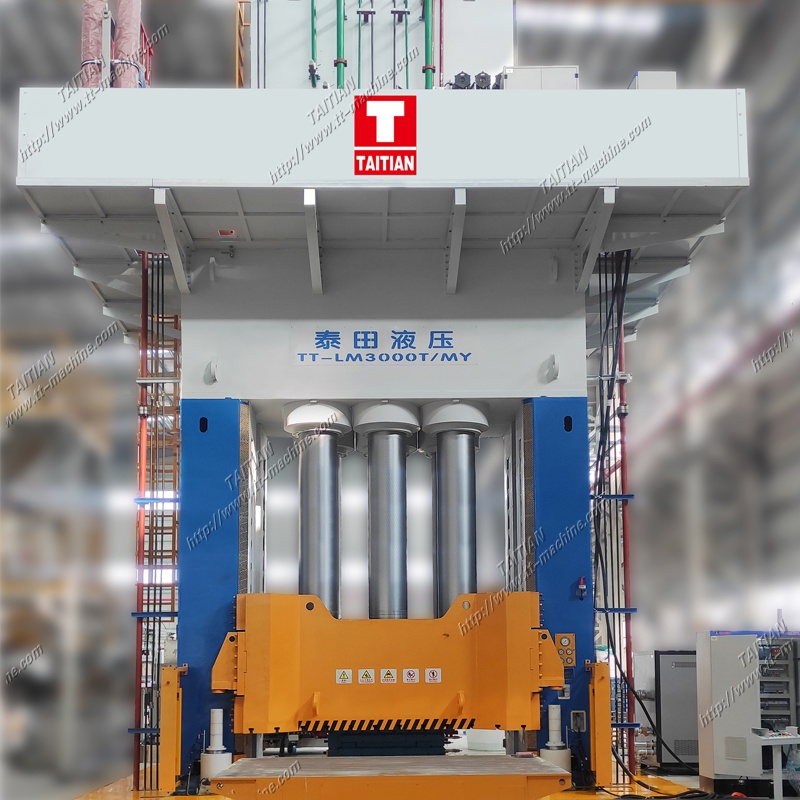
A Hydraulic Press looks simple from the outside: a frame, a cylinder, a hydraulic system, a control cabinet, and a working table. In actual production, however, the press becomes part of a much larger process. The machine must cooperate with molds, operators, feeding systems, material characteristics, temperature requirements, forming speed, safety standards, and downstream inspection.
Many buyers begin with one question: “How many tons do I need?” That question matters, but it is not enough. A press with enough nominal tonnage can still perform poorly if it lacks stable pressure control, accurate guiding, enough opening height, suitable table size, or sufficient rigidity under eccentric load. This is why two machines with similar tonnage can produce very different results on the same part.
The real difficulty is that every production team has a slightly different pain point. One factory may be struggling with cracked parts during deep drawing. Another may need better surface quality for composite molding. A third may want to reduce manual handling in an automotive parts line. The right Hydraulic Press should be selected around the customer’s production pain, not around a brochure specification alone.
A practical purchase starts with the part, the mold, the material, and the output target. The machine model should come after those details are clear.
How Should the Application Decide the Hydraulic Press Type?
The first step is to define what the press will actually do. A Hydraulic Press used for sheet metal deep drawing is not evaluated the same way as a press used for composite compression molding, forging, punching, or die spotting. Each process creates different demands on pressure curve, speed control, parallelism, heating, cooling, safety access, and mold handling.
For composite molding, the buyer may care about temperature control, pressure holding, platen size, and repeatable curing conditions. For metal deep drawing, blank holder force, drawing speed, and smooth pressure transition become important. For forging, frame strength, impact resistance, and hydraulic system durability are often more critical. For automotive interior parts, automation compatibility and surface consistency may decide whether the machine can support large-scale production.
This is where experienced technical communication matters. Instead of asking only for a machine quote, buyers should share part drawings, material information, target production volume, mold dimensions, and forming requirements. A qualified supplier can then recommend whether the project needs a four-column press, frame-type press, composite molding press, deep drawing press, punching press, forging press, or a customized production system.
- Composite parts: focus on pressure holding, temperature uniformity, platen accuracy, and curing repeatability.
- Sheet metal parts: focus on drawing force, blank holder control, stroke accuracy, and anti-wrinkle performance.
- Punching applications: focus on speed, rigidity, tooling protection, and safe material feeding.
- Forging applications: focus on tonnage reserve, frame strength, hydraulic reliability, and heavy-duty operation.
- Die spotting: focus on mold opening convenience, precision adjustment, and operator safety.
What Should Buyers Check Before Confirming Tonnage?
Tonnage is one of the most visible specifications of a Hydraulic Press, but it should not be treated as a single isolated number. Buyers need to understand the maximum forming force, working pressure, safety margin, mold contact area, material resistance, and whether the process requires full tonnage throughout the stroke or only at a certain forming stage.
Underestimating tonnage can cause unstable forming, incomplete parts, machine overload, and shorter equipment life. Overestimating tonnage can also create problems. It may increase investment cost, occupy more factory space, consume more energy, and reduce process sensitivity when delicate control is required. The goal is not to buy the biggest press. The goal is to buy the right press with enough reserve for stable production.
In many cases, tonnage should be discussed together with daylight, stroke length, table size, ram speed, return speed, opening height, and mold installation method. If the mold cannot be loaded conveniently, if the part cannot be removed safely, or if the press speed does not match the production rhythm, the tonnage number alone has little meaning.
| Selection Factor | Why It Matters | Buyer’s Practical Question |
|---|---|---|
| Tonnage Capacity | Determines whether the machine can complete the forming process with a safe margin. | Is the required force calculated from the actual part, material, and mold design? |
| Daylight Opening | Affects mold loading, part removal, and operator access. | Can the tallest mold and finished part move in and out smoothly? |
| Stroke Length | Influences forming depth, process flexibility, and mold compatibility. | Does the stroke match current and possible future products? |
| Table Size | Controls mold support, workpiece positioning, and layout flexibility. | Is there enough working area without compromising frame stability? |
| Speed Control | Impacts cycle time, forming quality, and process repeatability. | Can fast approach, pressing, pressure holding, and return be adjusted separately? |
| Automation Interface | Supports feeding, unloading, robots, sensors, and line integration. | Can the press connect with the factory’s future automation plan? |
Why Do Frame Strength and Stability Matter So Much?
Frame structure directly affects precision, safety, and service life. When a Hydraulic Press works under high load, the frame must resist deformation. If the structure is weak or poorly designed, the ram may not move evenly, the mold may wear faster, and the finished part may show dimensional variation. In severe cases, long-term stress can create cracks or alignment problems.
Buyers should pay attention to frame design, welding quality, stress relief treatment, machining accuracy, guide system, and assembly standards. A well-built press is not only about heavy steel. It is about how the force travels through the machine. Good engineering reduces unnecessary deformation and helps the press maintain stable performance over years of operation.
This is especially important for large-tonnage machines, deep drawing parts, composite panels, and molds with wide working surfaces. The larger the press, the more important structural analysis and machining capability become. A reliable supplier should be able to explain how the machine frame is designed, processed, inspected, and tested before delivery.
How Can Control Systems Improve Production Consistency?
Modern production does not only need force. It needs repeatable force. A Hydraulic Press with a well-designed control system can help operators manage pressure, stroke, speed, holding time, temperature, alarms, and safety logic more consistently. This is especially valuable when different operators work on the same line or when the factory produces multiple parts on one machine.
Good control design reduces dependence on manual experience. Operators can follow stored process parameters, engineers can adjust recipes more accurately, and managers can reduce variation between shifts. For manufacturers making automotive parts, home appliance components, electronic parts, composite products, or metal formed parts, this consistency can make the difference between stable output and repeated rework.
The control system should also support safe operation. Emergency stops, light curtains, two-hand controls, overload protection, pressure monitoring, position feedback, and fault alarms are not decorative features. They protect operators, molds, and the machine itself. Before buying, customers should ask how the supplier designs safety logic for their specific operating environment.
- Adjustable pressure and stroke settings help match different products.
- Recipe storage can reduce setup errors during product changeovers.
- Alarm records make troubleshooting faster and more transparent.
- Automation signals support future production line upgrades.
- Safety interlocks reduce the chance of dangerous manual operation.
What Should Be Compared Before Purchasing?
A low initial quotation can be tempting, but the purchasing team should compare the full cost of ownership. A Hydraulic Press that saves money at the beginning may become expensive if it causes frequent downtime, slow troubleshooting, inconsistent products, high energy consumption, or difficult spare parts replacement.
A more useful comparison includes machine structure, hydraulic components, electrical system, control logic, machining accuracy, quality inspection process, delivery schedule, installation support, training, warranty terms, spare parts availability, and after-sales communication. Buyers should also consider whether the supplier can customize the press around the production process rather than forcing the customer to adapt to a standard model.
| Comparison Area | Weak Purchase Decision | Stronger Purchase Decision |
|---|---|---|
| Machine Selection | Choosing only by tonnage and price. | Choosing by application, mold, material, cycle time, and future production needs. |
| Supplier Communication | Receiving a quick quote with little technical discussion. | Reviewing drawings, process details, layout needs, and production targets before quotation. |
| Quality Control | Checking only photos of finished machines. | Understanding welding, machining, assembly, testing, and inspection procedures. |
| After-Sales Support | Asking about warranty only after a problem happens. | Confirming installation guidance, training, troubleshooting, spare parts, and maintenance support in advance. |
Why Does Supplier Experience Affect Long-Term Value?
A Hydraulic Press is not a shelf product for most industrial buyers. Even when the machine belongs to a standard category, the real production conditions are often unique. The mold size, material thickness, forming depth, product appearance requirements, factory space, operator habits, and output target can all change the final configuration.
This is why supplier experience matters. A capable manufacturer can ask better questions before production begins. It can help identify missing details, warn buyers about possible process risks, and recommend more realistic specifications. Xiamen Taitian Machinery Technology Group Co., Ltd. is positioned as a machinery manufacturer serving hydraulic press projects across different industrial applications, including composite forming, metal forming, punching, forging, and other press solutions.
For buyers, the advantage is not only getting a machine. It is getting an engineering conversation. When the supplier understands both press design and production pain points, the purchase process becomes more practical. Customers can discuss tonnage, frame structure, mold requirements, control needs, safety devices, and maintenance access before the machine arrives on site.
Which Mistakes Should Buyers Avoid?
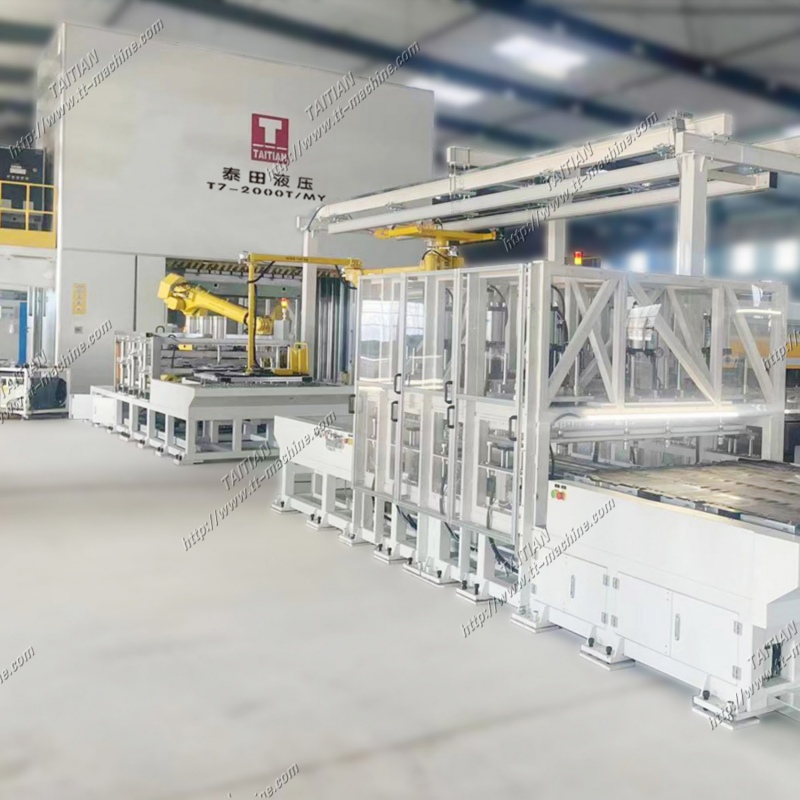
The most common mistake is treating the Hydraulic Press as a simple capacity purchase. Some buyers compare two machines only by tonnage and price, then discover later that the table is too small, the stroke is not suitable, or the pressure curve cannot support the process. Another mistake is ignoring the mold. The press and mold must work together; if the mold design is not considered early, installation and adjustment can become frustrating.
A third mistake is overlooking the production environment. A machine that works well in theory may be inconvenient if the factory lacks enough space for material feeding, mold change, maintenance access, oil cooling, or finished part handling. Buyers should review layout drawings and operator movement before the equipment is shipped.
It is also risky to ignore after-sales support. Hydraulic systems require correct maintenance, clean oil, proper seals, stable electrical components, and trained operators. Even a strong machine needs responsible operation. Before placing an order, buyers should confirm what documents, training, spare parts, and troubleshooting support will be available.
- Do not select tonnage without checking the part and mold data.
- Do not ignore daylight, stroke, and table size.
- Do not accept vague answers about safety devices.
- Do not overlook factory layout and maintenance space.
- Do not focus only on purchase price while ignoring downtime cost.
- Do not delay technical communication until after the machine is built.
FAQ
What is a Hydraulic Press used for?
A Hydraulic Press is used to apply controlled force to materials or molds for forming, pressing, punching, drawing, forging, compression molding, straightening, assembly, and other industrial processes. The exact use depends on the press structure, tonnage, control system, tooling, and production requirements.
How do I know what tonnage I need?
Tonnage should be calculated based on the material, forming area, process resistance, mold design, and safety margin. It should not be guessed from the finished part size alone. Sharing part drawings and material information with the supplier is the most practical way to avoid under-sizing or over-sizing the machine.
Is a customized Hydraulic Press better than a standard model?
A standard model can be suitable for common processes, but customization is often better when the part, mold, cycle time, automation plan, or safety requirement is specific. The best choice depends on whether the standard configuration can meet production goals without forcing compromises.
What information should I prepare before asking for a quote?
Buyers should prepare part drawings, material type, material thickness or weight, mold dimensions, required tonnage if already known, production capacity target, factory voltage, automation needs, safety preferences, and any special requirements such as heating, cooling, pressure holding, or recipe control.
How can I reduce downtime after installation?
Downtime can be reduced by choosing a press with reliable components, clear maintenance access, proper operator training, good documentation, spare parts planning, and responsive technical support. Preventive maintenance, oil cleanliness, seal inspection, and regular system checks are also important.
Conclusion
The right Hydraulic Press should solve a production problem, not create a new one. Before making a purchase, buyers should look beyond tonnage and price. The better path is to evaluate the application, material behavior, mold design, frame strength, control system, safety requirements, production rhythm, and long-term service plan together.
A well-selected Hydraulic Press can improve product consistency, reduce rework, protect molds, support safer operation, and help the production line scale with fewer surprises. A poorly selected machine may still run, but it can quietly increase cost through slow cycles, unstable quality, operator frustration, and maintenance delays.
If your team is planning a new Hydraulic Press project or comparing press options for composite molding, metal forming, punching, forging, or customized industrial production, Xiamen Taitian Machinery Technology Group Co., Ltd. can help review your application requirements and recommend a more suitable press solution. To discuss your part drawings, tonnage needs, layout conditions, or automation plan, please contact us and start a technical conversation with our team.